
Wingspan Pocket: A Compact Strategy of Birds, Synergy, and Smart Choices
Wingspan Pocket takes the familiar charm of bird-collecting strategy and compresses it into a format that feels approachable, brisk, and easy to bring to the table. It keeps the sense of building a living system of interlocking powers, yet eliminates a large share of the complexity that can hinder down newcomers. The result is a game that still feels rooted in the world of habitats, feeding, nesting, and clever sequencing, but one that asks less of players before they can begin enjoying it. Instead of a sprawling tableau and a lengthy rule set, this version offers a tighter experience built around quick decisions, compact turns, and a satisfying race to assemble the most effective bird row.
A Familiar World in a Smaller Frame
What immediately catches your attention is how much of the original identity remains intact despite the reduced footprint. The bird illustrations still carry the same sense of liveliness and care, with detailed artwork that makes every card worth pausing over. Some birds return with artwork many players will recognize, while others arrive with fresh visuals that help the pocket edition feel like more than a simple reduction. The presentation balances nostalgia and novelty well, so experienced fans can spot familiar faces while still discovering a few surprises. That visual continuity matters, because so much of the appeal comes from the connection between theme and system.
Compact Components with Personality
The box contents are deliberately streamlined, but they still feel thoughtfully selected. Resin eggs occupy a major portion of the physical package, giving the game a tactile appeal that suits the nature theme especially well. Their speckled look adds character, making them seem less like plain tokens and more like miniature objects pulled from a bird habitat. Alongside them are wooden feathers used to track turn structure, and these are easy to read at a glance. The cards fill out the rest of the box, supported by player aids and a nest board that is small but functional. Everything serves a clear purpose, and nothing feels wasted or decorative for its own sake.
Cards That Carry More Than One Job
One of the most clever design decisions is the way every card has a dual identity. On one side, a card shows a food symbol that helps power your future actions. On the other, it presents a bird that can enter your growing row. This split purpose creates interesting tension from the start, because each card you receive must be judged for its immediate utility and its long-term potential. The decision is never just about what is visible now, but what it might become later. That simple idea keeps the opening moments lively, since even a card that seems underwhelming can become valuable depending about the present condition of your table.
Opening Choices with Real Tension
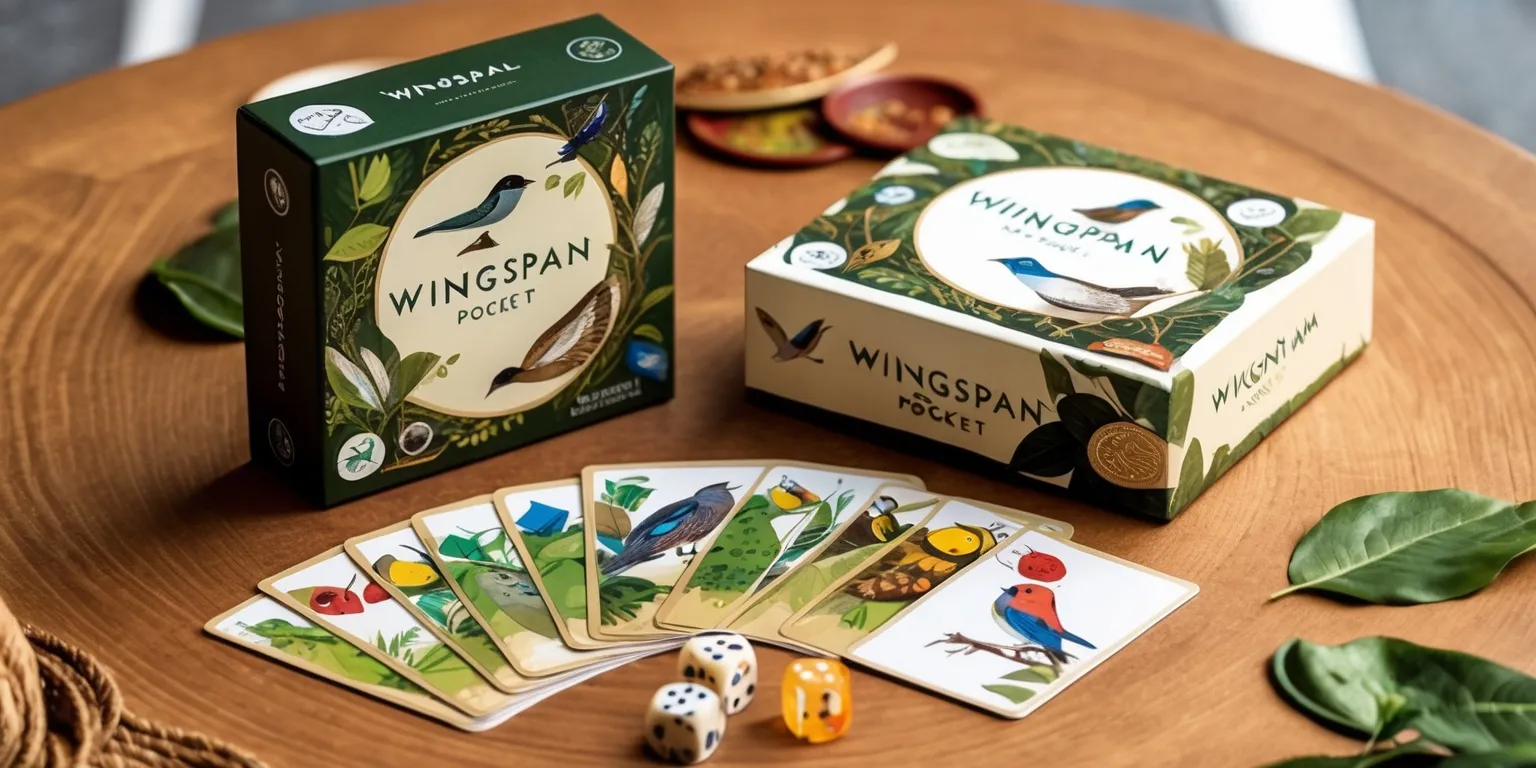
Players begin by receiving a small hand of six cards, then must divide them between possible birds and fuel for later turns. That alone creates a surprisingly sharp opening puzzle. The game also lays out a visible pool, giving you a handful of options to pursue rather than forcing blind choices every time. This visible selection is one reason the game feels fast without becoming trivial. You are not overwhelmed by endless possibilities, but you still have enough information to make meaningful decisions. At this stage, every choice affects how the rest of the session will flow, especially if you can line up a bird that helps support the next one you want to play.
Three Actions, Many Directions
On your turn, the core actions are elegantly few. You can place a bird, collect cards, or add eggs. This narrow menu keeps the pacing clean, yet each option has important implications. Playing a bird strengthens your future turns, collecting cards expands your options, and placing eggs helps both with scoring and with the requirements of certain birds. Because the same basic actions recur throughout the game, the interest comes from timing rather than from rule complexity. The challenge is knowing when to spend a turn on immediate growth and when to preserve momentum for a later, more efficient sequence. That rhythm gives the game a steady sense of progression.
Bird Powers That Reflect Nature
The special abilities on the bird cards are one of the most appealing areas of design. Many of them echo real-world habits in a way that feels playful yet grounded. The common Cuckoo, for example, interacts with another bird in a way that mirrors its notorious nesting behavior. The Snowy Owl brings an element of uncertainty to the table by drawing from the deck and tucking a qualifying bird beneath itself. The Turquoise-Browed Motmot spreads a resource opportunity across the table, allowing all players to benefit from a shared draw. These powers are easy to grasp individually, but when combined they create a living engine that feels distinct every time it comes together.
Building a Row That Feeds Itself
The main strategic appeal lies in the way birds begin to support one another. Once a few cards are in play, the row becomes a chain of actions that can reduce your dependence on standard turn choices. A bird might provide resources, another might generate cards, and another could help with egg placement. This creates a compact engine-building puzzle that rewards planning without requiring long-term bookkeeping. The pleasure comes from watching a sequence of abilities begin to sustain itself. When the row starts working efficiently, the the game creates a compelling feeling of forward drive, and each turn becomes an exercise in deciding whether to refine the system or extend it.
Synergy as the Central Puzzle
A lot of the pleasure lies in uncovering which birds cooperate best. A card that supplies a particular food type may pair beautifully with another that turns that food into card access or additional value. Some combinations are especially clean, allowing you to avoid wasting turns on basic resource gathering. That means the game encourages a kind of opportunistic planning, where you scout the available cards and imagine how they might support a future sequence. Because the available market changes, you are always reevaluating what to pursue. This creates a pleasing feeling of adaptation, where success depends not on rigid planning alone but on reading the table and shaping your direction around it.
Resource Flow Without Excess Complexity
The pocket edition trims away some of the more demanding overhead from the larger game, especially in the way resources are handled. Instead of juggling more elaborate systems, players work with a cleaner structure that is easier to parse at a quick look. That does not mean the game becomes shallow. Instead, the design focuses attention on the moment-to-moment question of whether a turn should be spent on setup, recovery, or direct advancement. Because the rules are lighter, players can focus more on tactical judgment and less on procedure. The outcome is a game that feels even more immediate, with fewer pauses for interpretation and more time spent actually making useful decisions.
Scoring Pressure and Endgame Timing
The game’s end condition creates a clear pace for the session. Once a player reaches the maximum bird count in their row, the scoring phase begins, and every placement suddenly matters in a sharper way. Bird values contribute directly to the final tally, while eggs and tucked cards add further layers of reward. The structure pushes players to think not only about what helps now, but what will still matter when the final count arrives. Since the game is short, every turn has visible consequences, and there is little room for wasted movement. That gives the closing stretch a brisk, competitive feel, even when the overall experience remains light.
Goals That Shape the Table
When using the more advanced setup, goal cards add another layer of direction. These shared objectives reward players for meeting specific conditions, such as matching point ranges or particular wingspan thresholds. Their presence makes card selection even more interesting, because a bird that fits a goal may become more valuable than one with a stronger standalone effect. This creates a pleasing balance between raw efficiency and opportunistic scoring. The goal system also encourages players to pay attention to what others are building, since chasing a shared objective can alter the value of a card on the communal market. It keeps the table dynamic without adding much extra complexity.
Accessibility That Still Feels Thoughtful
The biggest accomplishment of the pocket version is how smoothly it lowers the barrier to entry while maintaining the essence of the original design. It removes the most intimidating layers, but it does not flatten the experience into something generic. The game still asks players to think about sequencing, efficiency, and the relationship between bird abilities. It still offers moments where a line of cards suddenly clicks. It still presents attractive artwork and thematic coherence. What changes is the burden of learning and setup, which becomes far lighter. That makes it suitable for shorter sessions, newer players, or anyone who wants the core strategic feel without the longer commitment of the full-scale format.
Playtime, Pace, and Table Feel
One of the most practical strengths of Wingspan Pocket is its speed. Turns move quickly, the game state is straightforward to interpret, and the number of decisions per round stays manageable. Even with several players, the whole experience remains comfortably contained within a short window. This makes it especially effective for groups that want a meaningful strategy game without devoting an entire evening to it. The pacing also helps the table feel focused, since there is rarely a long wait between turns and the board state changes often enough to keep attention high. It is a game that respects time while still feeling like a proper strategic contest.
Visual Appeal and Table Presence
Although the box is smaller, the game does not feel visually diminished. The birds remain the star element, and their illustrations continue to provide the richest part of the presentation. The speckled eggs and wooden feathers give the components a handcrafted look, while the modest card layout keeps the table uncluttered. There is a pleasant contrast between the compact footprint and the sense of life that the artwork brings. Even players who are unfamiliar with the original can appreciate the care put into each piece. The aesthetic works because it supports the theme rather than distracting from it, making every component feel like part of a coherent natural world.
What the Trimmed Design Preserves
Reducing a larger design can sometimes strip away the qualities that made it compelling, but this version keeps the most important ones intact. It still offers meaningful card selection, satisfying combinations, and the ongoing challenge of shaping a responsive engine. It still gives players a strong thematic identity, with birds acting in ways that feel rooted in behavior and ecology. It still creates tension through limited choices and visible opportunities. The simplification mostly removes friction, not interest. As a result, the game feels like a distilled form of the larger experience, emphasizing the parts that make it engaging while leaving out much of the procedural weight that once stood between the player and the fun.
-

- Ava Martinez 19 Nov 2026