
Illuminating Innovation: How AI is Shaping Game Graphics and Production
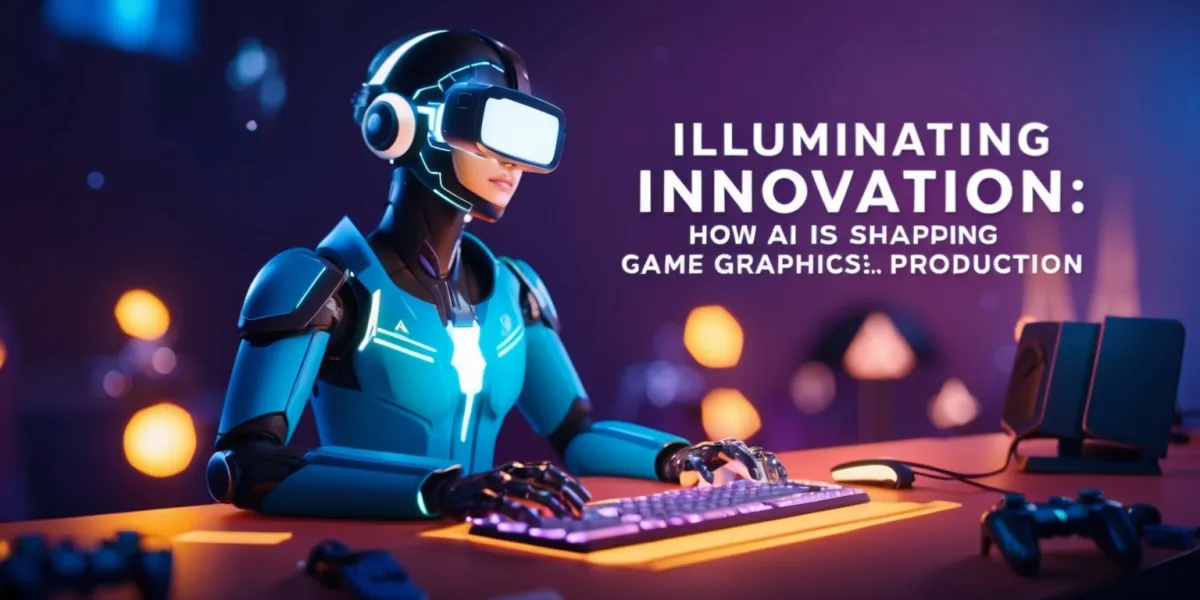
This write-up dives into the discussion around Consider this alternative: "the influence of artificial intelligence on the creative process." of interactive experiences, particularly in the development of video games. The technology remains a hot topic with a range of opinions: while some individuals oppose its incorporation into creative projects, others see potential for AI to resolve intricate technical challenges involved in game production.
Recent insights were gathered from a leading figure at Ubisoft, a developer renowned for his work on the engine that drives many of the company’s celebrated titles, including a famed historical adventure series. With an upcoming project that puts this engine through rigorous testing, he shared his views on how AI can be effectively integrated into the development process.
He offered a simplified explanation of AI’s application in enhancing computer graphics techniques. In his view, numerous strategies in graphics depend on random sampling methods, a concept used to generate realistic lighting effects by collecting and processing scattered light data. He compared this approach to what artificial intelligence does when it consolidates extensive lighting data to produce a coherent outcome; essentially, he equated the process with stochastic sampling, a method well known in technical circles.
- A variety of techniques in rendering depend on random sampling to simulate natural lighting.
- Artificial intelligence can merge scattered lighting details into a unified solution.
- This process is akin to a well-established method in computer graphics that resembles Monte Carlo integration, a concept often introduced in secondary school studies.
He further noted that while the use of artificial intelligence is a natural fit within the realm of computer-generated imagery, it may not resolve challenges in every aspect of game development. The practical application of AI beyond graphics remains an area that requires further exploration. He concluded that incorporating AI into production processes makes complete sense, at least where its strengths clearly align with technical needs.
How might artificial intelligence be further utilized to elevate video games? What are the possibilities for harnessing this technology in other production areas, or should its use be limited to its natural applications within graphics? The conversation about the future of AI in game development continues to provoke thoughtful debate.
-

- Ava Martinez 05 Jul 2026